Drone STEM Course
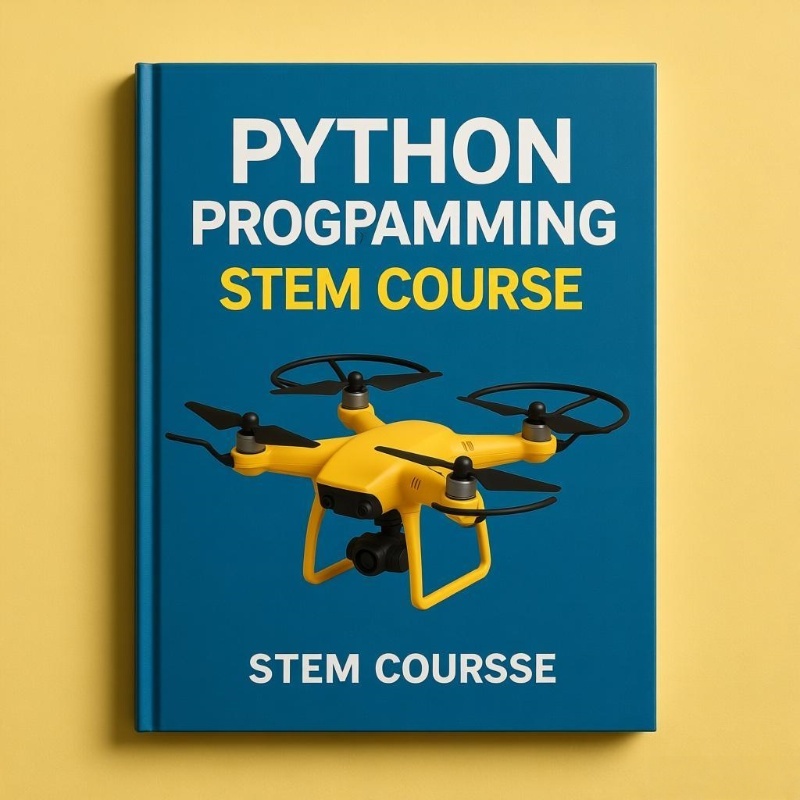
SenseSTEM
- Product description:
SenseSTEM, A cross disciplinary drone education system designed specifically for primary and secondary schools as well as vocational colleges, with project-based learning (PBL) as its core, integrating science, engineering, programming, and art to cultivate the core competencies of future technology talents.
1. Highlights of the curriculum system
• Layered teaching architecture
• Enlightenment stage (6-12 years old): Learn basic structures and flight principles through modular drone assembly (such as LiteBee Brix), and combine gamified tasks to stimulate interest.
Advanced stage (12-18 years old): Introduce Python/Scratch programming to control drone formation flight, and develop practical projects such as obstacle avoidance and aerial photography using AI visual recognition.
Competition stage: Adhere to the standards of the International Youth Drone Competition, design challenging tasks such as racing and logistics simulation, and strengthen team collaboration and innovative thinking.
Interdisciplinary integration
The course covers aerodynamics, sensor technology, 3D printing (drone modification), and data processing, synchronously linking mathematical modeling with physical experiments to achieve a closed loop of STEAM education.
2. Core advantages
• Full chain teaching support
Provide standardized textbooks (such as the "Theory and Practice of Unmanned Aerial Vehicles" series), teacher training and certification systems, and laboratory construction plans, including hardware support such as IoT security networks and mixed reality training systems, to lower the entry barriers for schools.
• Real scene driven
Design agricultural inspection, emergency rescue and other cases, and students will understand the social value of technology through tasks such as aerial photography composition and path planning, cultivating problem-solving abilities.
Deep integration of AI and programming
Compatible with DJI Tello EDU and other devices, supporting multi machine collaborative control and SDK development. Students can develop AI functions such as face tracking and automatic return, connecting with basic artificial intelligence education.
3. Application achievements
•Student ability improvement: Cooperative school cases show that students participating in the course have significantly improved in logical thinking, hands-on ability, and competition award rates, with some students shifting from "game addiction" to technological exploration.
Education equity practice: Through public welfare projects, deliver courses and equipment to remote areas, such as Zhangjiajie Cooperative Bridge Township Central School, to help narrow the gap in science and technology education between urban and rural areas.
4. Cooperation mode
School cooperation: Customize school-based curriculum, provide teacher training and event coaching.
• Institutional empowerment: Output course IP and laboratory design plans, and jointly organize technology festivals or research activities.
Why choose SenseSTEM?
Industry endorsement: The course content has been approved by experts from Beihang University and has been selected as a demonstration project for STEM education in multiple regions.
Ecological maturity: covering all educational scenarios from hardware and software to competitions, adapting to the policy orientation of the Ministry of Education's "Artificial Intelligence into the Classroom".
Joining hands with SenseSTEM, let drones become the wings for teenagers to explore the future!
CONTACT US
Tel: +65 96463534
Email: info@dronesenseai.com
Add: 55 Ayer Rajah Crescent #07-05, Singapore 139949